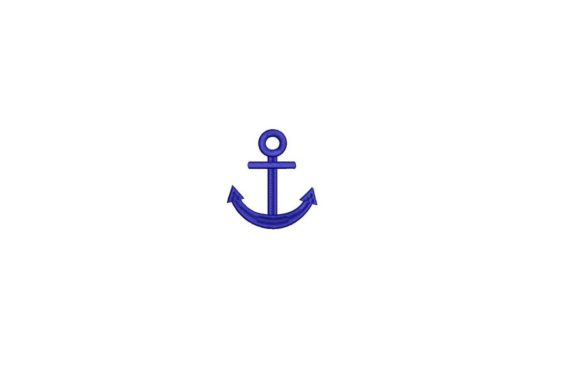
Anchor Design: An Embroidery Designer’s Review for Small Business Merch
When you first open an embroidery file called Anchor Design, your eye goes straight to the silhouette. As someone who has digitized and stitched hundreds of commercial projects, I can tell you that anchor motifs carry a specific weight. They are not purely decorative. They signal stability, maritime tradition, and a kind of grounded craftsmanship. In the context of small business merchandise and branded patches, this particular machine embroidery design offers a lot more than a nautical nod.
Before we go further, let me note that Anchor Design is built for embroidery machines, offered in multiple sizes, and packaged with multiple embroidery file formats. That alone tells me the creator understands commercial flexibility. Whether you run a café, a boutique, a handmade soap studio, a bakery, a florist, or a pet brand, this design can be adapted across your product line without re-digitizing every time.
First Impression: Classic, Bold, and Business-Ready
The anchor is one of those rare symbols that feels both rugged and refined. Anchor Design reads as professional without being cold. It leans toward a classic, bold, and slightly rustic personality. It is not overly playful, but it is approachable. It is not ultra-modern, but it has clean lines that hold up in both traditional and contemporary branding.
Because the design is offered in many sizes, the same embroidery file can feel substantial as a chest logo or delicate as a sleeve accent. That range matters when you are building a cohesive brand identity across different garment types and product categories.
For a small business, first impressions happen in seconds. When a customer sees an embroidered anchor on an apron or a tote bag, they register durability, reliability, and a sense of place. Anchor Design delivers that without shouting.
Real Business Use: Where Anchor Design Shines
Let me walk you through how Anchor Design performs in actual production for small business merch. I have reviewed hundreds of digital embroidery files, and this one has a natural home in several key applications.
Embroidered Patches for Uniforms and Retail
An embroidered patch is one of the most versatile ways to use this design. Because the anchor motif is recognizable at a glance, it works beautifully as a staff badge, a brand patch on work shirts, or a merchandise tag on aprons. The multiple file formats mean you can send it directly to a patch manufacturer or stitch it in-house. If you run a café or a bakery, a small anchor patch on a cap or apron gives your team a polished, unified look.
Cap Embroidery and Curved Surfaces
Many embroidery designs struggle on cap fronts because of the curve and the limited hoop area. Anchor Design, with its available size options, can be scaled down to fit a cap profile without losing the integrity of the shape. This is a critical advantage for cap embroidery. A small anchor on the front panel or side of a cap reads clearly and does not distort during stitching.
Tote Bags and Apron Embroidery
Tote bags and aprons are among the most popular items for custom apparel and handmade product brands. The anchor motif works especially well on canvas aprons or cotton totes because the design’s lines complement the texture of the fabric. Tote bag design with an anchor feels intentional. It does not look like an afterthought. For a florist or a boutique, a tote with an embroidered anchor becomes a walking billboard for your brand identity.
Boutique Merchandise and Event Gifts
If you produce limited-edition merch for a seasonal event or a local market, Anchor Design can be stitched on koozies, small pouches, or even as a label accent on handmade goods. Because the file comes in multiple sizes, you can test it on different substrates without needing a new digitizing setup. That saves time and money.
Where to Use Anchor Design Carefully
No design is perfect for every surface. After testing similar motifs in commercial production, I want to flag a few areas where Anchor Design needs thoughtful placement.
- Very small patch sizes. If you scale the design below a certain threshold, the details may crowd together. Always stitch a test sample at your intended size before committing to a bulk run.
- Curved surfaces on caps or sleeves. While the design adapts well to caps, extremely tight curves or very small sleeve areas may require scaling to avoid distortion. Use a stabilizer designed for caps.
- High stitch density areas. If the design has dense fills around the anchor ring or flukes, check the stitch density on your software. Dense areas can cause fabric puckering on lightweight shirts or thin totes.
- Dark uniforms. If you are stitching on navy or black fabric, choose thread colors with strong contrast. A gold or white anchor will pop. A dark grey or navy thread will disappear.
- Frequent washing. Items like aprons and staff uniforms get washed often. Use a quality stabilizer and test the design on a sample garment through multiple wash cycles to ensure the stitches hold.
How Anchor Design Affects Brand Identity and Customer Trust
When you put an embroidered anchor on a product, you are making a statement about your business. The anchor is a universal symbol of steadiness. For a small business, that translates into professionalism and recognition. Customers see a consistent emblem across your staff uniforms, your tote bags, and your merchandise, and they begin to associate your brand with reliability.
Anchor Design also supports a handmade presentation. When stitched well, embroidery adds a tactile, quality layer that printed logos cannot match. A customer who buys a tote with a carefully embroidered anchor is more likely to perceive your product as premium and durable. That perception directly affects product value and buyer engagement.
For Etsy sellers and craft business owners, using a consistent machine embroidery design across your product line helps build visual consistency. Shoppers recognize your work even in a crowded marketplace. The anchor motif is distinctive enough to stand out but classic enough to remain timeless.
Practical Embroidery Designer Notes for Production
Before you send Anchor Design to production, here are the steps I recommend based on years of commercial embroidery work.
- Test in black and white first. Stitch the design in a single color to evaluate the shape, spacing, and stitch density. This reveals any digitizing issues before you add multiple thread colors.
- Check if it works at small patch size. Scale the design down to your target dimension and stitch a sample. If the detail becomes muddy, use a larger size or simplify the design.
- Review thread color contrast. Place your chosen thread colors beside the fabric. Hold them under natural light and store lighting. Contrast is everything for readability.
- Inspect spacing and outline. Look at the gap between the anchor and any surrounding elements. Tight spacing can cause fabric distortion. Open spacing is safer for most substrates.
- Confirm hoop size. The design comes in many sizes, but make sure your hoop can accommodate the largest version you plan to use. Check your machine’s maximum hoop dimensions before ordering or stitching.
- Test on real fabric. Do not rely on a digital mockup. Stitch the design on the exact fabric you will use for production. Different weaves and weights affect how the design sits.
- Use proper stabilizer. For patches, a tear-away stabilizer is common. For caps and aprons, a cut-away stabilizer provides better long-term stability. Adjust based on fabric texture.
- Create a mockup for client approval. If you are producing custom apparel for a client, stitch a sample and photograph it on the actual garment. A printable mockup helps the client visualize the final product.
- Compare beside other design assets. Place Anchor Design next to your existing logos, typography, or icons. Ensure the visual language matches. Inconsistent design assets dilute brand identity.
- Confirm commercial licensing. The product description indicates this is an embroidery file for machine use, but always verify that your intended use is covered. If you plan to sell finished products with this design, confirm that the license allows commercial embroidery. Do not assume. Licensing terms vary by seller.
Final Thoughts on Anchor Design for Small Business Merch
Anchor Design is a strong candidate for any small business looking to build a consistent, professional brand identity through embroidery. It works across patches, caps, aprons, tote bags, and event merchandise. It is classic without being boring, and bold without being aggressive.
As with any digital embroidery file, the success of the finished product depends on testing, fabric choice, and stabilizer selection. Take the time to stitch samples at multiple sizes and on different materials. That investment pays off in finished product quality that customers notice and trust.
Whether you are a café owner, a boutique operator, a florist, a baker, or a handmade brand, an anchor motif carries the right message: grounded, reliable, and built to last. Anchor Design gives you the flexibility to place that message on everything from staff uniforms to customer gifts. That is the kind of design asset that grows with your business.