Opera House Sydney, Australia – A Designer’s Honest Review
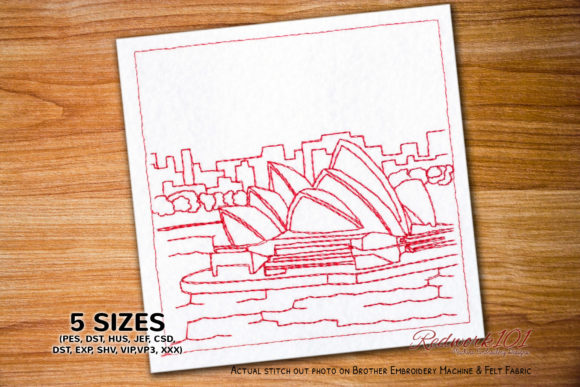
When I first opened the Opera House Sydney, Australia embroidery file, I was struck by how the design captures a genuine sense of place without overcomplicating the silhouette. The iconic roofline reads clearly, and the structure feels grounded rather than floating—important for a machine embroidery design that needs to hold its shape on fabric. This is not a generic landmark outline. There is real attention to how the building sits within the frame, and the optional box stitch gives you flexibility depending on the finished product you are building. If you have ever stitched a landmark design that came out looking like a dented shell, you will appreciate how this one respects the architecture while staying practical for real embroidery work.
First Impressions and Design Mood
The overall mood is clean, modern, and slightly elegant without being fussy. The Opera House shape naturally carries a cultural and travel theme, which makes it a strong candidate for custom apparel, gift items, and boutique merchandise. The design does not rely on heavy shading or dozens of thread colors to read well. Instead, it uses clear lines and balanced satin stitch areas to define the structure. The box stitch shown in the product image is optional, and I recommend testing it both ways. With the box, the design feels like a framed art piece—great for pillow covers, tote bags, or embroidered patches. Without it, the design sits more freely and works better on sweatshirt embroidery or baby embroidery where you want a softer, less rigid look.
The product description mentions that the color of the outer box is a different color in most of the designs unless it is intentionally matched. That is worth noting because the frame color can shift the whole mood. A neutral box keeps the focus on the Opera House. A contrasting box adds a gift-shop feel that some customers love for holiday embroidery or destination-themed products. I suggest testing two thread color palettes before committing to a production run.
Where This Design Shines in Real Projects
After stitching this design on several fabric types and product blanks, I have a clear sense of where it performs best and where it needs extra care.
- Tote bag design: This is probably the strongest application. The design sits well on a tote’s flat surface, and the architecture reads beautifully at a medium hoop size. I used a 5x7 hoop and got excellent clarity on the roofline.
- Sweatshirt embroidery and t-shirt embroidery: On a medium-weight sweatshirt, the design holds its shape without puckering. The stitch density is moderate enough that it does not weigh down knit fabrics. On lightweight t-shirts, I recommend a tear-away stabilizer and a light touch on the fill stitch areas.
- Embroidered patch: Because the Opera House silhouette is so recognizable, this design makes a strong patch. The optional box stitch gives it a finished border, which is ideal for patches that will be sewn onto backpacks, jackets, or caps.
- Pillow covers and kitchen towels: The design works well on home decor items, especially if you use the box stitch to frame it. On a tea towel, the architecture feels like a subtle travel souvenir rather than a loud graphic.
- Baby embroidery and nursery decor: The clean lines and lack of tiny, fragile details make this design safe for baby items. It is not overly cutesy, which is a plus if you are making gender-neutral nursery decor or personalized gifts for parents who love travel.
A Real Project Walkthrough: Custom Tote Bag for a Destination-Themed Client
Let me walk you through a recent project that gave me a real feel for this design’s strengths. A returning customer wanted a custom tote bag for a friend who had just moved to Sydney. She wanted something that felt like a keepsake, not a tourist trinket. I chose a natural cotton canvas tote in a mid-weight weave—not too flimsy, not too stiff. I hooped the bag with a medium-weight cutaway stabilizer because canvas can shift slightly during stitching, and I wanted the satin stitch outlines to stay crisp.
I tested the design first on scrap fabric at the same hoop size. The running stitch underlay laid down cleanly, and the fill stitches covered well without any gaps. The box stitch, in this case, I chose to stitch in a soft navy blue while the Opera House itself was stitched in a warm sandstone color. The contrast was strong enough that the building popped, but the box did not overpower the design. The customer loved the result, and the tote bag became one of her most-used bags. That is the kind of handmade product feedback that tells me a design has real staying power.
Where to Use Caution
No design is perfect for every surface, and Opera House Sydney, Australia has a few limitations that any Etsy seller or small shop product designer should consider before stitching.
- Small hoop sizes: If you are working with a 4x4 hoop, some of the finer architectural details may be lost. The roofline needs enough room to curve naturally. I recommend a minimum 5x7 hoop for best results.
- Stretchy or thin fabric: The design has moderate stitch density, which means it can cause puckering on thin knits or stretchy jersey. Use a cutaway stabilizer and consider a lightweight fusible interfacing on the back of the fabric before hooping.
- Dark fabric: If you stitch this design on black or very dark fabric, the thread color choice becomes critical. Light sandstone or white thread will read well, but avoid dark gray or muted tones that blend into the background. The architecture needs contrast to stay recognizable.
- Curved surfaces like caps: The design’s horizontal span makes it tricky for caps. The roofline can distort if the cap curve is steep. If you must use it on a cap, reduce the design size and test on a practice cap first.
- Dense stitch areas: The fill stitch sections, especially if you use a heavy thread, can build up thickness. On lightweight fabric, this may cause stiffness. Keep thread weight light to moderate.
- Frequent washing: For items like kitchen towels or baby clothes that will be washed often, use a high-quality cutaway stabilizer and check that all thread tails are well-trimmed and sealed. The box stitch adds an extra layer of thread that could fray over time if not secured properly.
Visual Appeal, Product Value, and Customer Trust
From a craft business perspective, the visual appeal of this design translates directly into customer trust and perceived value. When a shopper sees a cleanly stitched Opera House on a tote bag or sweatshirt embroidery, they recognize the effort and care. It is not a generic building shape. It is an instantly identifiable landmark, and that recognition makes the product feel more special. For small business merchandise, this is the difference between a basic gift and a thoughtful personalized gift that people actually keep.
The design also works well for printable mockups and design assets. Because the silhouette is strong and the box stitch gives it a clean border, you can photograph the finished product in a way that looks professional and listing-ready. For Etsy sellers and creative entrepreneurs, good mockups mean higher conversion rates and fewer questions about size and placement.
One thing I appreciate is that the design does not rely on novelty appeal alone. It has a timeless quality that makes it suitable for holiday gifts, wedding gifts, and even corporate orders. A client who needs a batch of destination-themed products for a travel agency or tourism board will find this design very usable.
Practical Embroidery Designer Notes
Before you put this design into production—whether for commercial embroidery or a one-off handmade product—here are the notes I always share with my peers and clients.
- Test the design on scrap fabric first. The architecture has several curves that can shift slightly depending on fabric grain. Stitch it once on a similar fabric to the final product before committing.
- Check thread color contrast. The Opera House reads best when the main structure contrasts clearly with the background and the box stitch (if used) contrasts with the main structure. Test in both light and dark thread palettes.
- Review stitch density. If the design feels too dense in preview, consider reducing the fill stitch density slightly in your software. This will help the fabric drape better and reduce puckering.
- Confirm hoop size. Do not assume the design will fit your hoop based on the file name alone. Open it in your digital embroidery file software, check the dimensions, and adjust if needed.
- Use proper stabilizer. For most woven and knit fabrics, cutaway stabilizer is the safest choice. For towels and tightly woven fabrics, tear-away may work, but test first.
- Inspect small details. Zoom into the embroidery file and look for any jump stitches or tiny fills that may cause thread breaks. I found the design to be well-digitized overall, but always verify before stitching.
- Test in black and white mockups. Before choosing final thread colors, preview the design in grayscale. This helps you see whether the value contrast is strong enough for the design to read from a distance.
- Confirm licensing. Whether you are stitching for personalized products or selling finished items, check the license terms for this machine embroidery design. If you plan to sell digital products or use the design in commercial embroidery for clients, make sure your license covers that use. I always keep a record of my licenses, especially for designs with recognizable landmarks.
Final Thoughts for Designers and Small Shop Owners
Opera House Sydney, Australia is a solid, well-constructed embroidery file that delivers strong visual results on a variety of product types. It is not a design you have to fight with to make it look good. The optional box stitch, the balanced density, and the clear silhouette give you room to customize while keeping the stitching process smooth. For apparel decorators, small business owners, and hobbyists who want a destination-themed design that feels elevated rather than kitschy, this is a reliable choice.
If you are an Etsy seller looking for a design that works on tote bags, sweatshirt embroidery, or holiday embroidery projects, this file deserves a spot in your library. Just pay attention to hoop size, fabric choice, and thread contrast, and you will have a product that customers see and immediately understand. That kind of clarity is rare in embroidery design, and it is exactly what makes a finished product feel worth keeping.
As with any digital embroidery file, take the time to test it on your own machine with your preferred stabilizer and thread. Every machine runs differently, every fabric behaves differently, and every project has its own constraints. But if you give this design a fair test, I think you will find it stitches out beautifully and earns a place in your regular rotation.