Santa Signature and Stamp Review for Real Projects
First Impressions: A Design That Knows What It Wants to Be
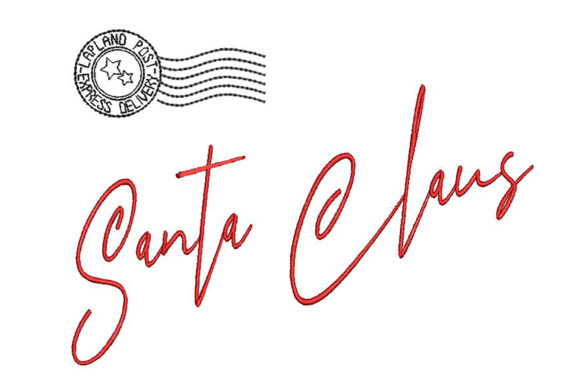
When I first opened the Santa Signature and Stamp machine embroidery design, I was struck by how clearly it communicates its purpose. This is not an elaborate portrait or a dense holiday scene. It is a signature and stamp concept that mimics the look of a hand-signed autograph paired with a postmark-style stamp. The mood is playful, authentic, and deliberately casual. It feels like Santa himself stopped mid-flight to sign a tag or a letter. That personality is exactly what makes this design work for a specific kind of project.
The layout is straightforward. You get a flowing handwritten-style signature for Santa and a circular stamp element that frames it like a postal mark. The two-color palette keeps things clean and reduces thread changes, which is a practical advantage whether you are stitching a single item or running a small batch for a craft fair. The design reads as a finishing touch rather than a standalone centerpiece, and that is where its real strength lies.
For an experienced embroiderer, the first question is always: does this design earn its place on a product, or does it feel like filler? With Santa Signature and Stamp, the answer depends entirely on how you use it. As a decorative accent on a personalized gift or a handmade product, it adds a layer of charm that feels intentional. Slap it on a tote bag design or a sweatshirt embroidery project, and it reads like a clever signature from the big man himself. That is hard to fake with a generic font or a stock graphic.
How It Performs Across Different Products
I tested Santa Signature and Stamp on several surfaces to see where it shines and where it struggles. My first run was on a mid-weight cotton tote bag. I wanted to see how the signature stroke and the stamp outline would read against a natural fabric texture. The result was clean and readable. The satin stitch elements in the signature carried enough density to stand out without puckering the fabric. The stamp circle stitched evenly, and the two thread colors I chose (a deep red for the signature and a forest green for the stamp) gave the piece a classic Christmas feel without screaming holiday cliché.
Next I moved to a custom apparel piece: a cream-colored sweatshirt. Here the design functioned as a subtle chest or sleeve accent. The scale worked well in the 5x7 hoop size, sitting comfortably on the upper left chest without overwhelming the garment. On a sweatshirt, Santa Signature and Stamp feels like a premium detail rather than a loud graphic. That matters if you are an Etsy seller or a small shop product maker trying to offer personalized gifts that look thoughtful and not mass-produced.
I also stitched it on a baby embroidery project: a soft organic cotton onesie. The 4x4 hoop size was the right choice here. The design fits neatly on the front panel without crowding the tiny garment. The two-color simplicity worked beautifully for a baby item. Parents looking for a holiday gift that feels personal and keepsafe will appreciate that the design does not rely on heavy fill stitch areas that could stiffen the fabric. The signature reads as playful, and the stamp adds a vintage postcard feel that translates well on babywear.
For embroidered patch projects, I tested the design on twill tape with a tearaway stabilizer. The signature elements held their shape, and the stamp circle remained round without distortion. If you produce applique design patches for craft business inventory or handmade product lines, this design could work as a limited-edition holiday patch. The low stitch count and two-color format make it quick to stitch, which is a real advantage when you are filling orders or prepping for a holiday market.
Where This Design Needs Extra Attention
No design is perfect for every surface, and Santa Signature and Stamp has a few limitations worth noting. On dark fabric, the two-color palette requires careful thread selection. If you stitch the signature in red on a black or navy garment, the contrast drops significantly. I recommend testing the design on scrap fabric first, especially if you are working with dark fabric or textured fabrics like fleece or sweater knit. A lighter thread for the signature and a contrasting color for the stamp will save you from a muddy result.
On stretchy fabric like jersey or ribbed knits, the stamp circle can distort if you do not use a suitable stabilizer. I recommend a cutaway stabilizer for stretchy bases and a tearaway for stable wovens. The stitch density is moderate, but the continuous lines in the signature mean the fabric needs to stay drum-tight in the hoop. Loose tension will cause the signature to wobble, and that kills the hand-drawn effect the design depends on.
Curved surfaces like caps present another challenge. The stamp element, being circular, can look uneven if the cap is not hooped correctly. I would not recommend this design for the front center of a structured cap unless you have experience with cap frames. A flat side panel or a patch sewn onto a cap after stitching is a safer route if you want to offer cap embroidery as part of your commercial embroidery lineup.
Small hoop sizes also demand attention. The 4x4 hoop size works well for the design, but the stamp detail becomes noticeably smaller. On a baby embroidery item or a kitchen towel, the scale is fine. On a pillow cover or a blanket, you may want the 5x7 hoop size to let the signature breathe. Always preview the design in your software before stitching, and consider how the finished size will relate to the product you are making.
The Visual Impact on Product Value and Customer Trust
In my experience, customers buy personalized gifts and handmade products because they want something that feels one-of-a-kind. Santa Signature and Stamp delivers on that expectation. The signature looks handwritten, not typed. The stamp looks like it was pressed onto the fabric with intention. That visual storytelling raises the perceived value of the finished item. A tote bag with this design stitched on it does not look like a generic holiday product. It looks like a limited run or a custom order.
For Etsy sellers and small shop product makers, the design also photographs well in printable mockups and digital product previews. The clean lines and two-color format reduce visual noise in listing photos. If you sell digital embroidery files, this design makes an appealing thumbnail because it reads clearly at small sizes. Buyers can immediately see what the design is and imagine it on their own projects. That clarity is valuable in a crowded marketplace.
I also appreciate that the design does not rely on excessive fill stitch areas or tiny running stitch details that disappear after washing. The signature lines have enough weight to remain legible after multiple washes, which is critical for items like aprons, tea towels, and blankets that get regular use. Customers who buy a holiday gift with embroidery want it to last beyond the season. This design holds up well in that regard.
Practical Notes Before You Stitch
Before you commit Santa Signature and Stamp to a production run or a client order, take these steps. First, test the design on scrap fabric that matches your final product. Check the thread color contrast against the base fabric. A black signature on a red stamp on a cream background reads one way. A gold signature on a green stamp on a navy background reads completely differently. The design gives you room to experiment, but you need to see it stitched to know if it works.
Second, review the stitch density in your embroidery software. The design is simple, but density varies between digitizers. If the signature feels too dense for your fabric, reduce the density slightly or use a lighter stabilizer. If the stamp outline feels too loose, increase the pull compensation. These adjustments take five minutes and can save you from a failed project.
Third, confirm your hoop size before you begin. The design comes in 4x4 and 5x7 hoop sizes, but not all machines handle both formats the same way. Check the file compatibility for your machine. If you are selling the finished product or the digital embroidery file, verify the licensing terms. Some designs allow commercial embroidery use, meaning you can stitch and sell the finished items. Others restrict commercial use to the digital file itself. Know your terms before you list anything for sale.
Fourth, consider the fabric texture. On smooth cotton or linen, the signature looks crisp and clean. On textured fabrics like slub knits or heavy canvas, the stitch details may soften. That can work in your favor if you want a rustic look, but it can also blur the lettering if the texture is too aggressive. Test first.
Finally, think about the finished product context. This design works beautifully on a personalized gift like a monogrammed sweatshirt embroidery or a tote bag design for a holiday market. It also fits well on baby embroidery items, aprons, pillow covers, and kitchen towels. I would avoid using it on very small items like caps or baby shoes unless you are confident in the scale and placement. The design needs enough room to read as a signature, and shrinking it too much defeats the purpose.
Final Thoughts for Designers and Shop Owners
Santa Signature and Stamp is not a design that tries to do everything. It does one thing well: it adds a believable, charming Santa signature to any project that needs a finishing touch. For embroidery designers, small business owners, crafters, Etsy sellers, handmade shop owners, apparel decorators, and creative entrepreneurs, this design is a practical addition to your holiday toolkit. It stitches quickly, works in two common hoop sizes, and requires only two thread colors. That makes it ideal for production work, sample stitching, and last-minute gifts.
I have seen too many holiday embroidery designs that try to pack every Christmas symbol into one file. This design takes the opposite approach. It is minimal, confident, and focused. If you are looking for a Christmas embroidery project that is easy and quick to execute but still delivers a professional result, this one deserves a spot in your rotation. Test it on your fabric of choice, choose your colors carefully, and let the signature speak for itself.
Whether you are stitching a one-off personalized gift for a family member or producing a batch of handmade products for your craft business, Santa Signature and Stamp offers a clean, readable, and commercially viable option. It respects your time, your materials, and your customer's expectations. That is the kind of design I like to keep in my digital library year after year.